Binance Fee Discount Math: What the 20% Kickback Really Saves
Codes mentioned here live on the Binance page, with current verification dates.
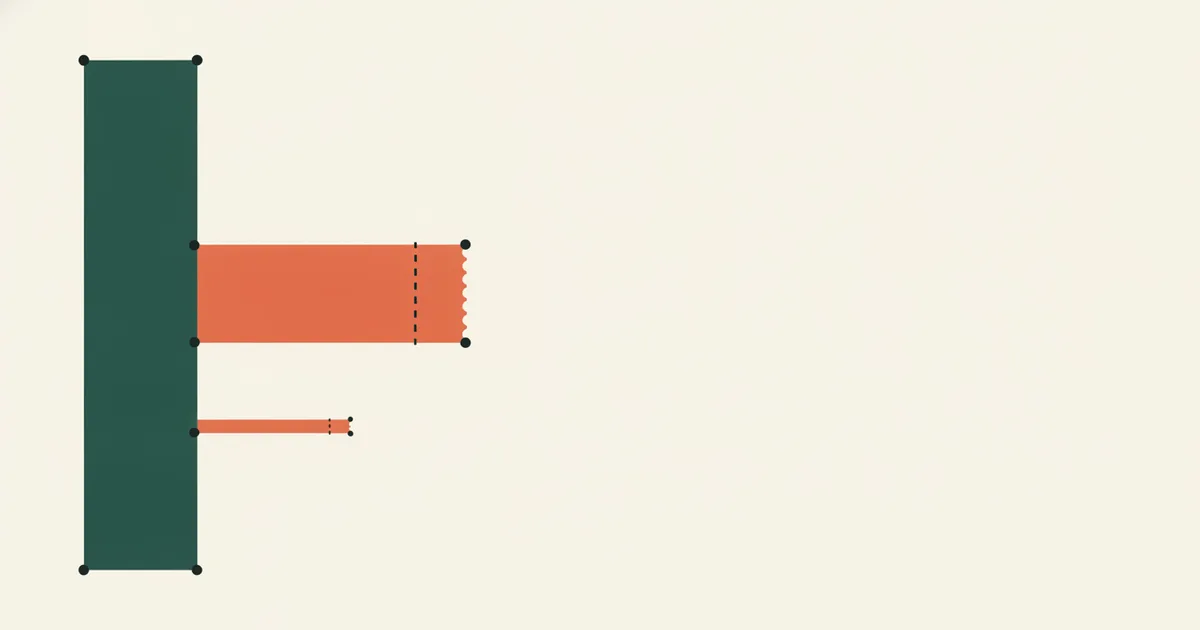
Referral pages love to describe the Binance fee kickback as if it were a meaningful discount for everyone. It isn’t. It’s a percentage of a percentage, and whether that adds up to real money depends almost entirely on how much you trade. This article does the arithmetic you’d otherwise have to do on a napkin: what the kickback actually pays at $1,000, $10,000, and $100,000 of monthly spot volume, what quietly shrinks those numbers further, and who should genuinely care.
One caveat before the math: Binance.com does not accept US residents, so if you’re in the United States none of this applies to you regardless of the numbers (Binance.US is a separate, more limited company). The Binance hub page covers that restriction and some US-friendly alternatives.
How the kickback actually works
When you register on Binance with a referral ID, the person who referred you earns a commission on the trading fees you pay. Binance lets that referrer share a slice of their commission back to you, and the shareable slice is capped at 20% of your trading fees. (This article prices out only the kickback; for the full picture of both referral systems, including the task-gated CPA vouchers, see how the Binance referral program actually works.) Two things follow from that sentence, and both get glossed over constantly:
- 20% is a ceiling, not a default. The referrer chooses how much to share when they create the code — anywhere from 0% to the cap. A referral ID with a 0% share saves you exactly nothing on fees. Binance shows the kickback rate on the registration screen when a code carries one; if you don’t see it, assume zero.
- It’s 20% of your fees, not 20% of anything you’d notice. Binance’s standard spot trading fee sits around 0.1% per trade for regular accounts (the current tiers are on Binance’s official fee schedule). Twenty percent of 0.1% is 0.02% of your traded volume. That’s the real headline number: two basis points.
A quick jargon note: “spot volume” means the total dollar value of your buys and sells of actual crypto (as opposed to futures or margin). If you buy $500 of BTC and later sell it, that round trip is $1,000 of volume — fees apply to both sides.
The math at three volume levels
Assume the standard 0.1% spot fee and the full 20% kickback — the best case a referral code can legally deliver. The formula is simple: monthly volume × 0.001 × 0.20.
| Monthly spot volume | Fees paid (0.1%) | Kickback (20%) | Saved per year |
|---|---|---|---|
| $1,000 | $1.00 | $0.20 | $2.40 |
| $10,000 | $10.00 | $2.00 | $24.00 |
| $100,000 | $100.00 | $20.00 | $240.00 |
Read that left column carefully, because “monthly volume” and “money I have in crypto” are very different numbers:
- $1,000/month volume is roughly a dollar-cost averager buying $250 of crypto a week, or someone buying $500 and selling $500. The kickback is worth about $2.40 a year — one gas-station coffee. Any single trade timed a few minutes differently will swing your cost by more than the kickback returns in twelve months.
- $10,000/month volume is an active hobbyist — rebalancing, swing trading, rotating between coins. $24 a year is real but modest: a streaming subscription, not a windfall.
- $100,000/month volume is a serious trader turning over a mid-five-figure account multiple times monthly. Now the kickback pays $240 a year for zero effort, and refusing it starts to look like leaving money on the sidewalk.
Scale the pattern up and you see why high-frequency traders treat kickbacks as table stakes: at $1 million of monthly volume the same math yields roughly $2,400 a year — except it doesn’t quite, because at that volume Binance’s VIP tiers cut your base fee below 0.1%, which shrinks the fee the kickback is computed from. The people who trade enough for the kickback to be large are also the people whose base fees are smallest. The mechanism partially defeats itself at the top.
What quietly shrinks the numbers
Three things make the table above a best case rather than a typical case:
The BNB discount competes with it. Binance has long offered a discount (historically 25%) for paying trading fees in BNB, its exchange token. That discount usually applies before the kickback is calculated, so the two compound rather than add: a 0.1% fee becomes 0.075% with BNB, and a 20% kickback on that leaves you at 0.06%. Good news for your total cost, but it means the kickback’s dollar value drops by a quarter the moment you enable BNB fee payment — which most cost-conscious traders do, because the BNB discount alone is worth more than the maximum kickback.
Zero-fee pairs pay zero kickback. Binance periodically runs zero-fee promotions on specific trading pairs. Twenty percent of nothing is nothing. If your trading happens to live on promoted pairs, the referral kickback is a rounding error on a rounding error.
Sub-maximum share rates. Plenty of circulating referral codes share less than the 20% cap, because the referrer keeps the rest. Halve the share rate and you halve every number in the table.
Who should care, and who shouldn’t
Volume traders should care. If you turn over five figures or more per month, the kickback is free, permanent, and stacks with the BNB discount. There is no catch beyond registering with the code — and since Binance doesn’t let you attach a referral ID after the account exists, the decision is one-time and irreversible. For this group, signing up without a kickback code is an unforced error worth tens to hundreds of dollars a year.
Casual buyers should not overweight it. If you’re buying a few hundred dollars of crypto a month to hold, the kickback is worth single-digit dollars annually. It should be roughly the eighth thing you evaluate about an exchange, after security history, withdrawal reliability, whether it operates legally where you live, asset selection, deposit methods, base fees, and customer support responsiveness. A casual buyer who picks an exchange because of a referral kickback has optimized the cheapest line item on the receipt.
The one scenario where even casual buyers should bother: if you’ve already decided on Binance for other reasons, using a kickback-bearing code at signup costs nothing and can’t be added later. Free pennies are still free. Just don’t confuse them with the “$100 bonus!!” framing that referral spam sites attach to what is, mechanically, a two-basis-point rebate.
The fine print that outranks the math
A few facts matter more than any row in the table:
- US residents are excluded entirely. Binance.com blocks the United States; a referral ID won’t route around that, and trying to via VPN risks a frozen account at KYC (identity verification) time.
- The referral ID must be entered at registration. There is no retroactive attachment, no support ticket that fixes it, no grace period.
- New-user voucher campaigns are separate from the kickback. Deposit-and-trade voucher offers change by period and country and are never guaranteed; the kickback is the only durable, math-able part of a Binance referral. Our verification process explains how we distinguish the two when we test codes.
Bottom line
The Binance fee kickback saves you at most 0.02% of your spot volume — $2.40 a year at $1,000 of monthly volume, $24 at $10,000, $240 at $100,000, before the BNB discount and VIP tiers trim it further. For volume traders it’s an easy, permanent yes. For everyone else it’s a nice-to-have worth about as much as the coins under your car seat — take it if you’re signing up anyway, but never let it choose the exchange for you.