Why Promo Credit Can Expire When a Gift Card Can't
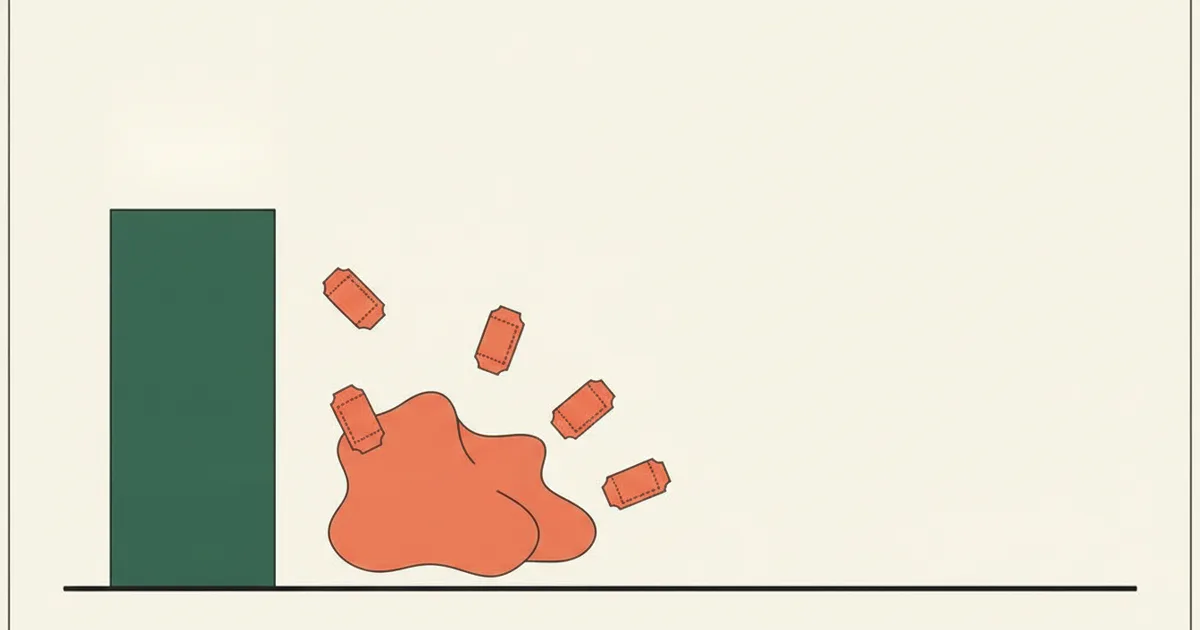
If you buy a $50 gift card, federal law says it has to stay spendable for at least five years. If a company hands you $50 in promotional credit for signing up with a referral code, that same law does nothing for you — the balance can be built to vanish in 30 days, and the company doesn’t have to warn you loudly when it does. Same-looking dollar sign, two completely different legal categories. Knowing which one you’re holding is the difference between planning around a bonus and losing it to a clock you never saw.
The five-year floor, and what it actually covers
The protection people are thinking of when they say “gift cards can’t expire” comes from the Credit CARD Act of 2009, implemented through Regulation E. The rule is specific, not a general ban on expiration: a gift certificate, store gift card, or general-use prepaid card can’t expire less than five years after the date it was issued (or after money was last loaded onto it), and if there’s an expiration date at all, it has to be clearly disclosed on the card itself. The rule also restricts dormancy, inactivity, and service fees on unused balances during that window. The full requirements are laid out in 12 CFR § 1005.20, the Consumer Financial Protection Bureau’s codified version of the rule.
That’s a real, enforceable floor — but it only applies to instruments that meet the rule’s definition of a gift certificate or gift card: something issued in exchange for payment, in a fixed amount, redeemable for goods or services. A card you bought at a grocery store checkout, or one a relative bought for you, falls squarely inside it.
The carve-out that swallows most promo credit
The same regulation explicitly excludes a category of balances that looks identical to a consumer but is legally a different animal: credit issued as part of a loyalty, award, or promotional program, at no cost to the recipient. The CFPB’s own commentary on the rule spells this out — programs that give consumers cards, codes, or account credit “as a reward for purchases made or for visits to the participating merchant,” and sales promotions that hand out coupons or discounts “for or towards goods or services,” sit outside the five-year requirement entirely. That interpretation is published alongside the rule itself in the CFPB’s official commentary on § 1005.20.
Referral bonuses, sign-up credits, and most in-app promotional balances fall into exactly this excluded bucket, for a simple reason: you didn’t pay for them. The rule was written to protect money consumers spent; it wasn’t written to guarantee the shelf life of money a company gave away to acquire you. That distinction — paid-for versus given-away — is the entire hinge the law turns on, and it’s why the same company can sell you a gift card with a printed no-expiration promise while your $10 referral credit from the same app quietly disappears a month later.
This is worth reading next to our breakdown of why referral programs pay in credits, cash, or something in between — platform credit is already the least liquid tier of referral reward, and now you know why it’s also the least protected one.
What’s still required, even on excluded credit
The five-year floor doesn’t apply, but that doesn’t mean anything goes. Two backstops still exist:
Federal unfairness and deception rules still apply. The FTC Act’s general prohibition on unfair or deceptive practices means a company can’t advertise “$25 in credit” and bury an expiration so effectively that a reasonable person had no real chance to see it before losing the balance. If the terms disclosed one thing and the practice was another, that’s a deception claim regardless of which specific expiration statute applies.
Some states go further than federal law. A handful of states impose their own rules on promotional balances — longer minimum windows, required point-of-issuance disclosure, or outright bans on expiration for certain categories — that can apply on top of the federal carve-out depending on where you live and where the merchant is chartered. State rules vary enough, and change often enough, that the only reliable move is checking the specific terms attached to your balance rather than assuming a rule you read about elsewhere applies to you.
What neither backstop guarantees is a long window. A company can satisfy both by disclosing “credit expires 30 days after issuance” in the terms you agreed to at signup — technically compliant, still a 30-day clock, and still something almost nobody reads before clicking accept.
Where the real expiration date actually lives
Because the marketing headline (“$50 in credit!”) almost never states the expiration, and the fine print almost always does, here’s where to actually look, in order of reliability:
- The account or wallet screen, not the promo banner. Most apps that issue credit show a balance page with an expiration date attached to each batch of credit — separate from the announcement that told you about the bonus in the first place. If a balance page exists, it’s a better source than any marketing copy.
- The confirmation email or in-app notification sent when the credit was issued. These frequently state the expiration in plain text, because it’s the compliance team’s proof that disclosure happened. Search your inbox for the program’s name plus “credit” or “bonus” rather than trusting memory.
- The program’s terms of service, specifically a section on “promotional credit,” “referral rewards,” or “account credit.” This is where the actual clock is defined if it isn’t shown anywhere else. Our field guide to reading a referral program’s terms page walks through how to find the relevant clause quickly instead of reading the whole document.
- Customer support, as a last resort. Support agents can usually look up the exact expiration tied to your account, though the answer you get is only as reliable as the agent reading it correctly off their own system.
Treat any of these as more authoritative than the original offer email or ad — the sign-up pitch describes the reward; only the account-level disclosure describes the deadline.
The practical takeaway
Before you count promotional credit as money you can plan around, ask which category it’s in. If you paid for it — a gift card you bought, or one someone bought for you — the five-year federal floor applies, and dormancy fees are restricted during that window. If it showed up because you signed up, referred a friend, or hit some other free trigger, assume it’s excluded from that protection until you’ve found the specific expiration date in your account or the program’s terms. That single check takes a few minutes and it’s the same discipline this site applies to every code it lists — see why referral codes quietly expire for the mechanics on the referral side specifically. A balance with no expiration date you can point to isn’t a balance with no expiration date. It’s just one you haven’t found yet.