What "Up to" Has to Prove Before an Advertiser Can Print It
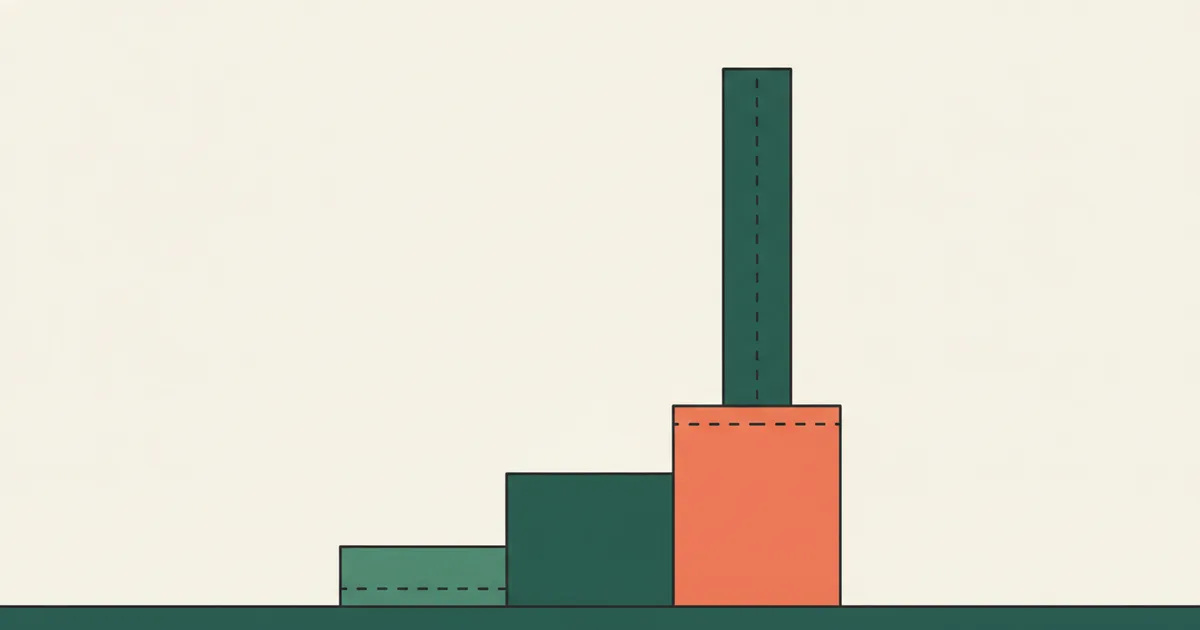
“Up to $200 in free stock.” “Up to 90% off.” “Save up to 20% on every trade.” The phrase “up to” shows up on nearly every sign-up bonus, coupon banner, and referral offer you’ll ever see, and it survives because it’s technically true almost by construction: if the real number is anywhere between zero and the ceiling, “up to [ceiling]” isn’t a lie in the narrow sense. But the Federal Trade Commission has spent decades refining a more useful question than “is this technically true” — namely, what does a reasonable consumer take away from that phrase, and can the advertiser actually back that up. The answer has changed over time, and it’s stricter than most advertisers, and most readers, assume.
Where the standard came from
The modern version of this rule traces back to a set of window-company cases the FTC settled in February 2012. Five companies — Gorell Enterprises, Long Fence & Home, Serious Energy, THV Holdings, and Winchester Industries — had advertised that their replacement windows would cut heating and cooling costs by “up to” a stated percentage, sometimes as high as 47%. The FTC’s complaints alleged the companies couldn’t support those numbers: the maximum savings figure wasn’t something a typical customer could expect to see, and in some cases wasn’t achievable under normal conditions at all. The settlement announcement is where the FTC first stated the standard plainly: companies “must have competent and reliable scientific evidence to substantiate that all or almost all consumers are likely to achieve the maximum savings claimed” before they can advertise that maximum.
That’s a real shift from the FTC’s older, looser position. Going back to guidance from the 1980s, the agency had treated an “up to” claim as substantiated if the maximum result was achievable by merely an “appreciable number” of consumers — a standard that, in practice, let advertisers headline a ceiling that only a small minority of customers would ever actually reach. “All or almost all” is a different bar entirely. Under the newer standard, printing “up to $200” implies that something close to the full customer base can expect to land near $200, not that a rare best case exists somewhere in the data.
The FTC didn’t just assert this — it tested it
What makes the 2012 action more than one company’s settlement is the research the FTC published alongside it. Commission staff ran a controlled study on how consumers actually interpret “up to” advertising, using a mocked-up ad for a fictional window brand — “Bristol Windows” — claiming “up to 47%” in energy savings. The full study and the press release summarizing it found that a majority of people shown the ad walked away believing the 47% figure represented a typical or expected result, not a rare ceiling — exactly the misimpression the “all or almost all” standard exists to prevent. That’s the part worth sitting with: this isn’t the FTC guessing at consumer psychology. It ran the experiment, and the experiment showed people read “up to X” as a promise about what they, personally, are likely to get.
That finding is why the FTC’s own recap of the case states the standard is “reinforced”: advertisers using “up to” claims should be able to substantiate that consumers are likely to achieve the maximum results promised under normal circumstances — not merely that the maximum is technically possible for someone, somewhere, under ideal conditions.
How this maps onto referral and coupon offers
None of the above is about windows specifically. The FTC’s authority here is Section 5 of the FTC Act, the general prohibition on unfair or deceptive practices, and the substantiation duty it creates applies to any advertiser making a quantified claim — a brokerage promising “up to $200” in gift stock, a retailer promising “up to 90% off,” a card issuer promising “up to $500” in referral bonuses. The test is the same one the window cases established: does the advertised ceiling reflect what most people who take the offer will actually get, or does it reflect a rare best case dressed up as the headline number?
Applied that way, the honest version of a reward claim isn’t “up to $X” standing alone — it’s “up to $X, but here’s what most people actually get.” We wrote about exactly this gap for one of the most visible examples in our coverage area: Robinhood’s new-customer offer advertises free stock “up to $200,” but by Robinhood’s own terms, about 99% of recipients get $5. The $200 figure is real — someone does occasionally get it — but it is nowhere close to what “all or almost all” participants receive, which is exactly the gap the FTC’s 2012 action was built to police.
Discount percentages work the same way. “Up to 90% off” on a storewide sale is frequently true for a handful of clearance items while the bulk of inventory sits at 10–20% off; the advertised ceiling and the typical customer experience can be worlds apart. The claim survives a narrow literal reading and fails the substantiation test the FTC actually applies.
How to read an “up to” claim in seconds
You don’t need to file a complaint to protect yourself from this — you need three questions, in order:
- What’s the realistic range, not just the ceiling? Any page that states only the top number and omits what a typical customer gets is giving you half the information by design. If a page can’t tell you what “most people” get, that’s itself informative.
- Is the ceiling structural or promotional? A ceiling built into a program’s mechanics (a maximum cap on a fee discount, a maximum match on a deposit) is a different thing from a marketing number chosen because it sounds good. Both can be true and still mislead if only the ceiling is shown.
- Does the page show its work? A source that cites the actual odds, payout tiers, or disclosed distribution behind an “up to” number is doing the substantiation the FTC asks advertisers to be able to produce. A page that just repeats the ceiling in bigger font is not.
Why this site avoids bare “up to” numbers
This is also why we don’t lead with ceiling figures on our own hub pages without the realistic case attached — the same discipline that governs why countdown timers and fake scarcity counters are a named dark pattern applies here: a claim that’s technically defensible but engineered to create a misleading impression fails the same test either way, whether the mechanism is a fake deadline or a cherry-picked ceiling. When we state a reward range, we try to put the typical outcome next to the maximum, because that’s the only version of the number a reasonable person can actually use to decide whether an offer is worth taking.
The next time a page tells you that you can get “up to” anything, the ceiling isn’t the interesting number. The interesting number is the one the page doesn’t lead with — what everyone else actually got.